NIFT DELHI · VISITING FACULTY · PRODUCT EXPERIENCE & INTERFACE DESIGN
I teach product design.
Just not as a list of screens to make.
From instinctevidencedecisions.
Across Semester 7, I teach UX laws, accessibility, product metrics, research, synthesis, problem framing and usability. The goal is not to memorise a process. It is to understand what you know, what you still need to learn, and what decision follows.
MY CLASSROOM RULE
You can disagree. You just need a better “because.”

Same institution. Different side of the table.
HOW I TEACH
I don’t want students taking notes about product thinking.
I want them caught doing it.
The room works better when design reasoning is visible, debatable and slightly uncomfortable. So I build the class around decisions, not slides.
Move the idea out of the slide and onto the table.
Different answers are fine. Unexplained answers aren’t.
Which problem? Which method? Which metric? Why this one?
The decision is not finished until someone else can follow the reasoning.
MY CLASSROOM RULE
You can disagree. You just need a better “because.”
WHAT I ACTUALLY TEACH
Six lecture decks.
One product-thinking loop.
Less “what should the screen look like?” and more “what do we know, what do we need to learn, and what decision follows?”
UX laws · cognition · accessibility · WCAG
Engagement · satisfaction · conversion · retention
Qualitative · quantitative · mixed methods
Findings · personas · opportunities · next steps
Need statements · POV · How Might We
Heuristics · SUS · usability · card / tree tests
TOOLS CHANGE. THE JOB DOESN’T:
opinionevidencedecision
ONE CLASS, IN MOTION
The slide looked very organised.
The classroom did not.
Students started with broad industry problems from secondary research. Their job was to decide what belonged together, what was merely a symptom, and which problem was worth carrying forward.
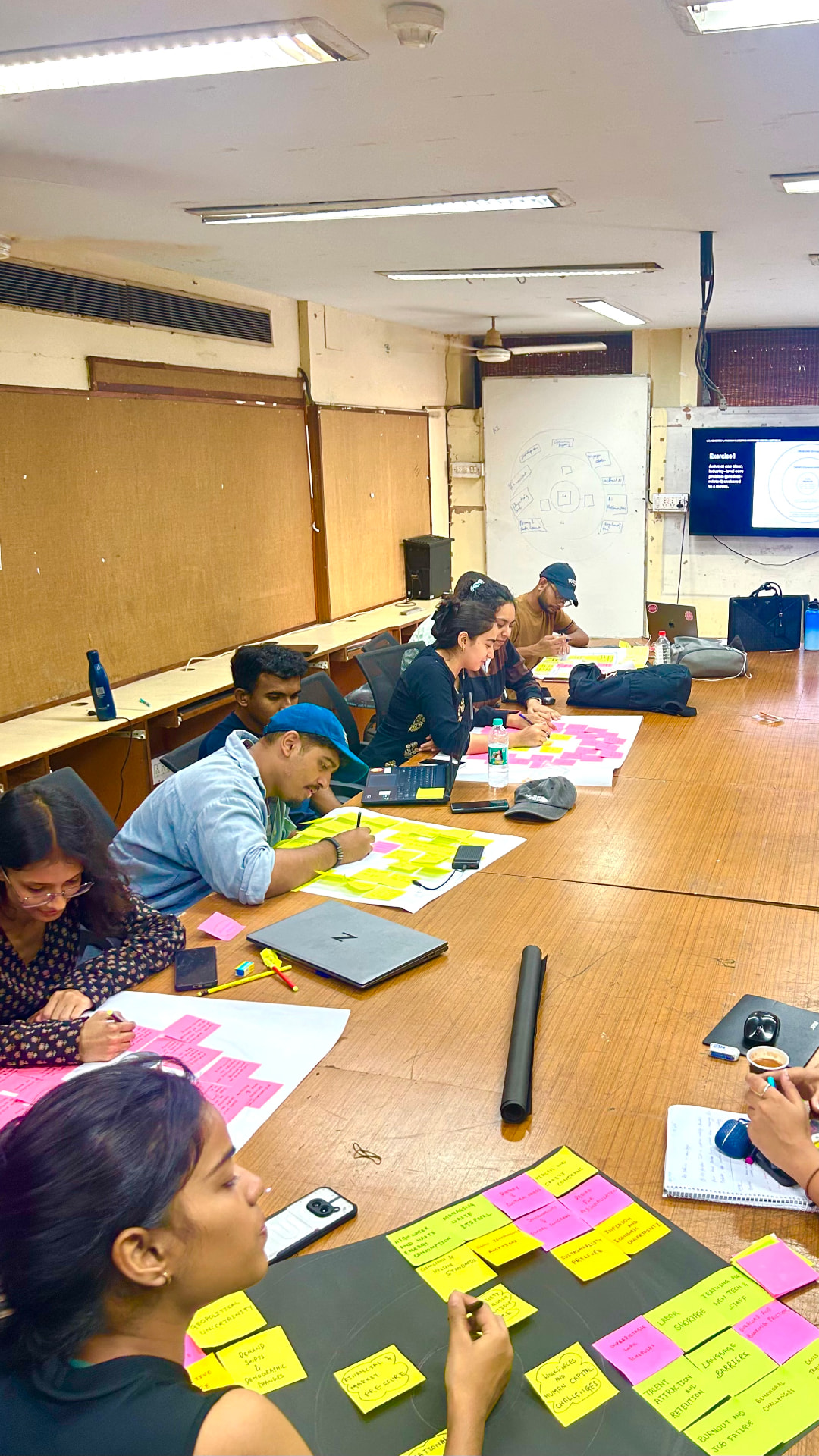
the model
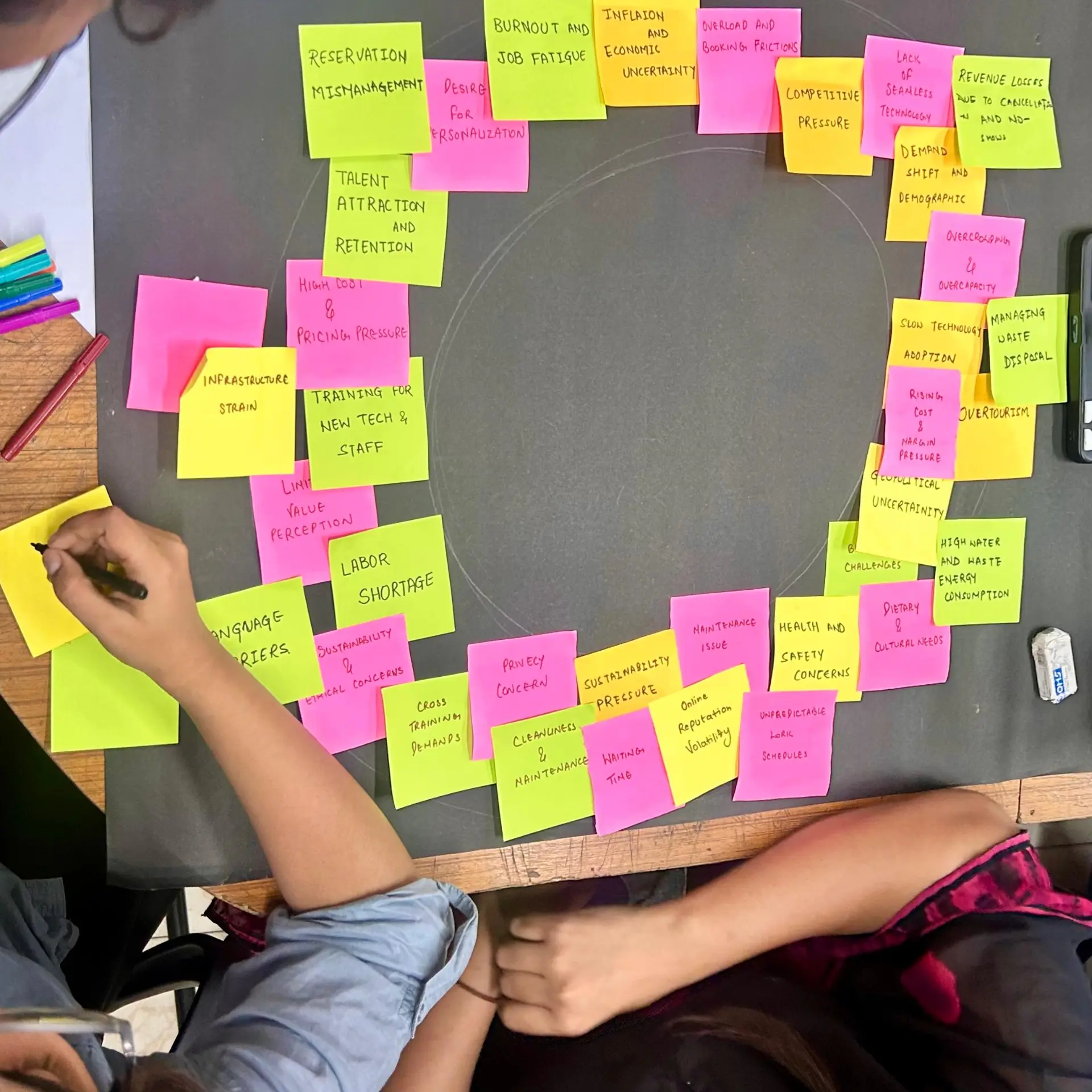
the room
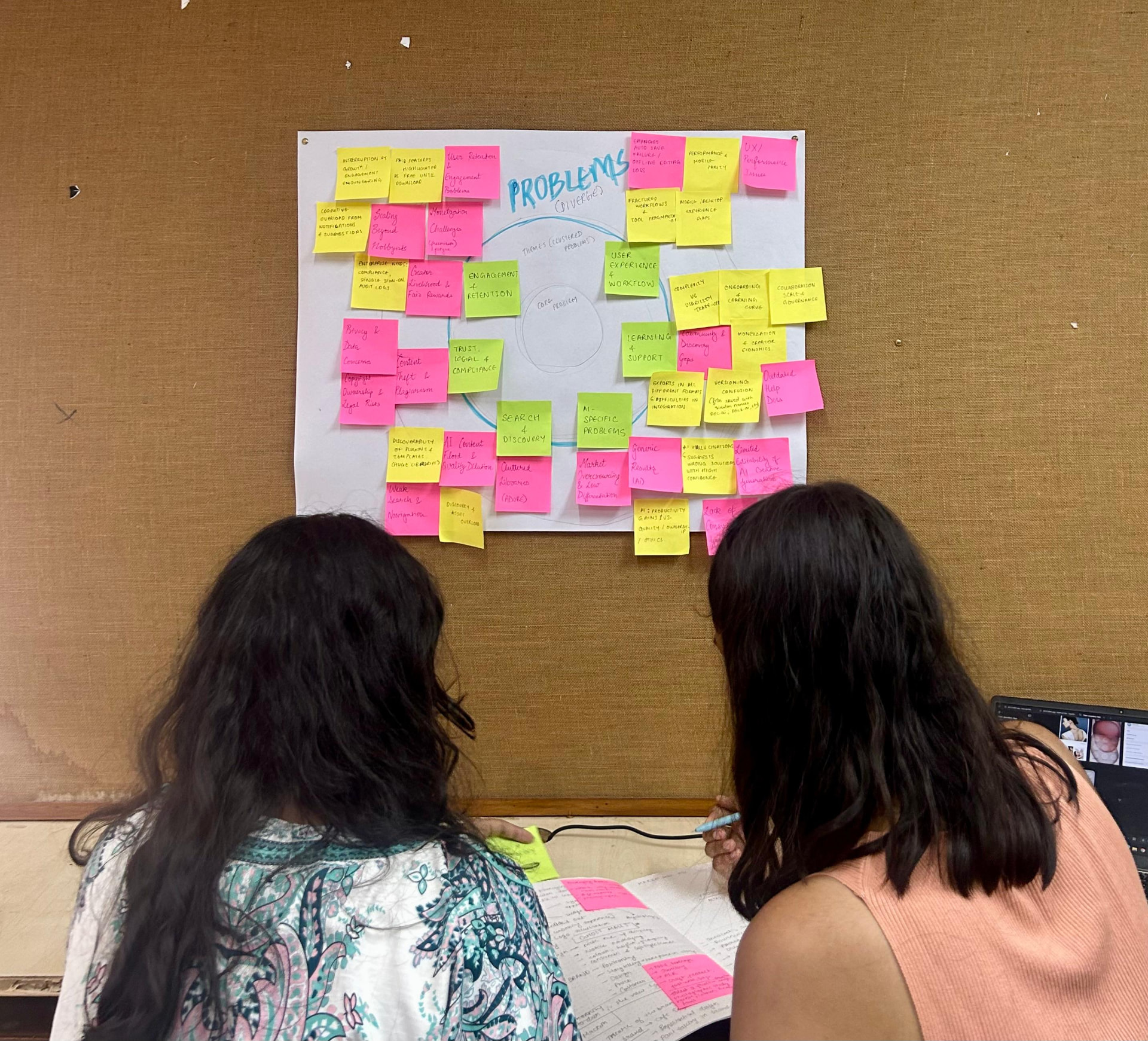
the argument
Moving one sticky note from one cluster to another forced the question no polished slide could answer for them:
“What are we actually trying to solve?”
WHAT I BRING INTO THE ROOM
I don’t enter the classroom only as a faculty.
I bring product work with me.
The useful exchange goes both ways.
PRODUCT WORK CLASSROOM
CLASSROOM PRODUCT WORK
The work gives me examples. The classroom gives me better questions.
WHAT I DON’T TEACH
Some things don’t make it onto my syllabus.
A process is useful. A ritual is not.
EXPLAIN THE WHY.
TEACHING, AS PART OF MY PRACTICE
The classroom keeps me honest.
Because someone eventually asks “why?”
Teaching forces me to turn instinct into language, language into evidence, and evidence into something another person can question. That has made me a more articulate product designer.
Teaching made me better at explaining the decisions instinct alone could not defend.